Too little, too late?
U.S. president Joe Biden has departed for Luanda, Angola with the mission of promoting a railway project called “The Lobito Corridor” that connects the port city of Lobito with the city of Ndola, capital of the Copperbelt province in Zambia. The project is not actually new, but an improved version of a railway originally designed and constructed between the first three decades of the the twentieth century, during the Belgian rule of the neighboring country Democratic Republic of Congo, formerly known as the Belgian Congo. At that time, Angola was under the dominance of the Portuguese Monarchy.
Mr. Biden is promoting now a project that was, in fact, promoted before by other powerful nations with interests in the region. It was once sponsored by the Portuguese and Belgian Monarchies, then by the Chinese foray in the African continent that begun after the independence in the seventies and now by the Americans. Apparently, the visit is part of an intention to regain some leverage for the United States in a region that has been recently dominated by Chinese investment and even Russian military presence throughout the continent.
Originally known as the Benguela railway, it passes trough cities such as Huambo, formerly Nova Lisboa, it was completed in 1928 but seriously damaged and even disrupted as a consequence of the Civil War between 1975-2002. It was rebounded by the Chinese after the Civil War came to an end, but, according to a Wall Street Journal video material posted in the project website, in such a poor way that the authorities have decided to trust an European-led, American-funded consortium for the reconstruction of the project.
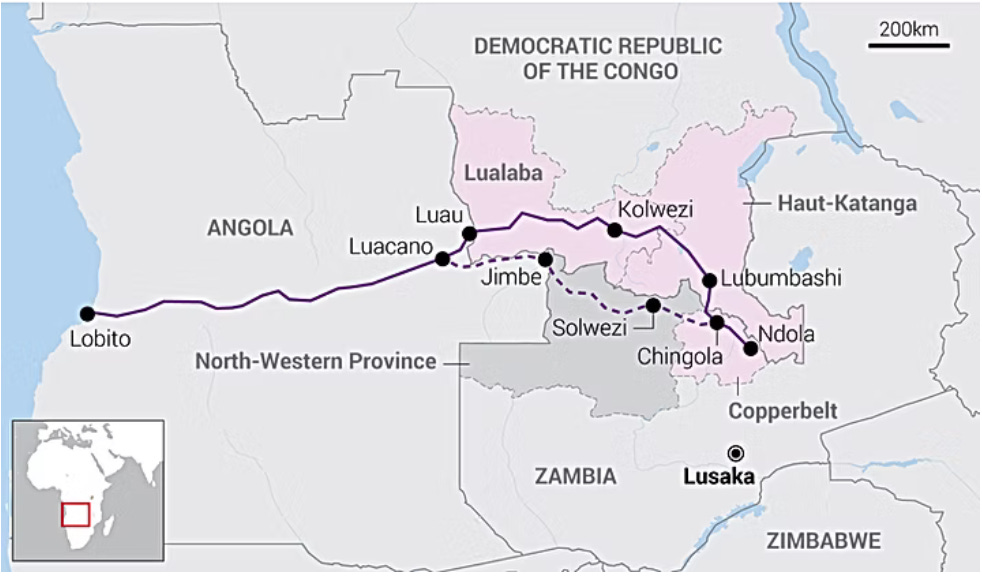
Map taken from Lobito Corridor website.
Based on The New York Times reporting on the matter, when Angola emerged from its decades long Civil War in 2002, Goverment oficials asked for help: China said yes, but United States said no. However, Thanks to the favaouring of Angola’s President João Lourenço of American interests in the region since taking office in 2017, it has now paid off with Mr. Biden choosing his country for a last minute visit to the only Sub Saharan country ever visited during his tenure.
The project is part of a broader strategy to secure access to raw and strategic materials whose main sources are located in the heart of Africa. Called “Partnership for Global Infrastructure and Investment”, it was launched last year in Japan at the G7 Summit. It has been considered as the United States counter balance of the China-led “Belt and Road Initiative”. Reporting by both The New York Times and Deutsche Welle mentioned consistent views offered by experts in the sense that the reconstruction of the American industries promised by the Make America Great Again president-elect Donald Trump would badly require those raw materials provided by countries such as Zambia, Democratic Republic of Congo, Angola and Tanzania. Yet, it’s not clear whether the American initiative can compete with decades-long China presence in the region materialized in projects such as the Tazara railway that connects Kapiri Mposhi with Dar es Salaam.
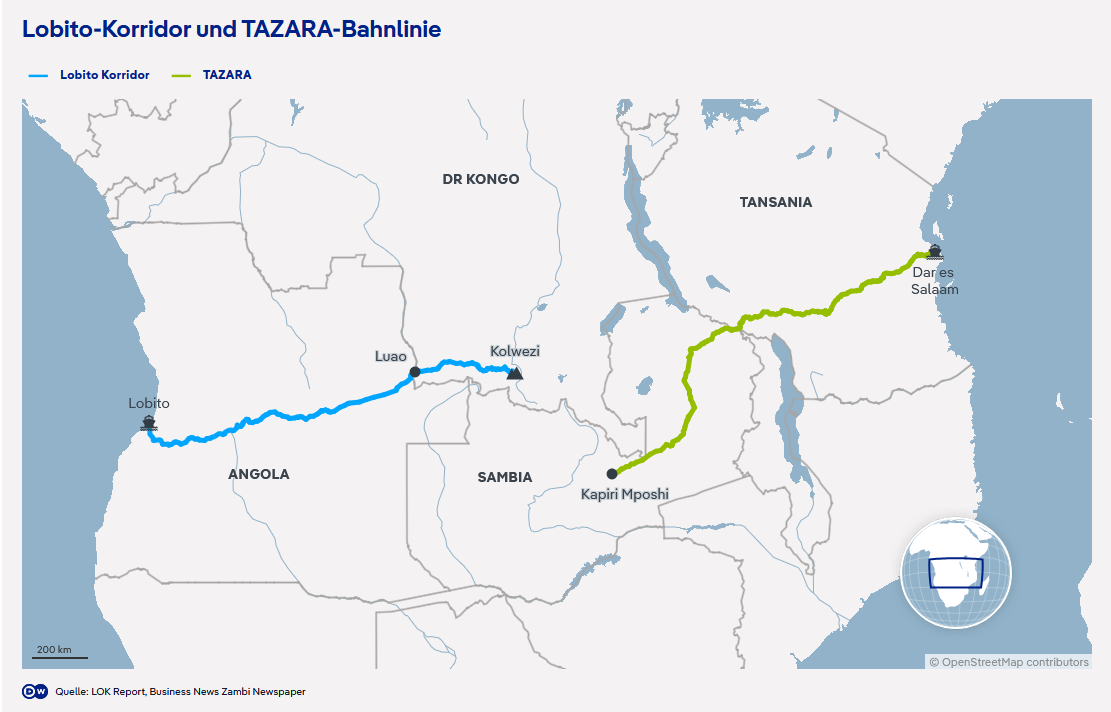
Taken from DW article “Joe Bidens letzte Auslandsreise führt nach Angola”
The Lobito poject looks like a win win investment not just for United States and European interests but also for China because of the high stakes of its interests in Angola. Questions is, will it bring any long-term benefit for the people of Angola?
Comentarios
Publicar un comentario